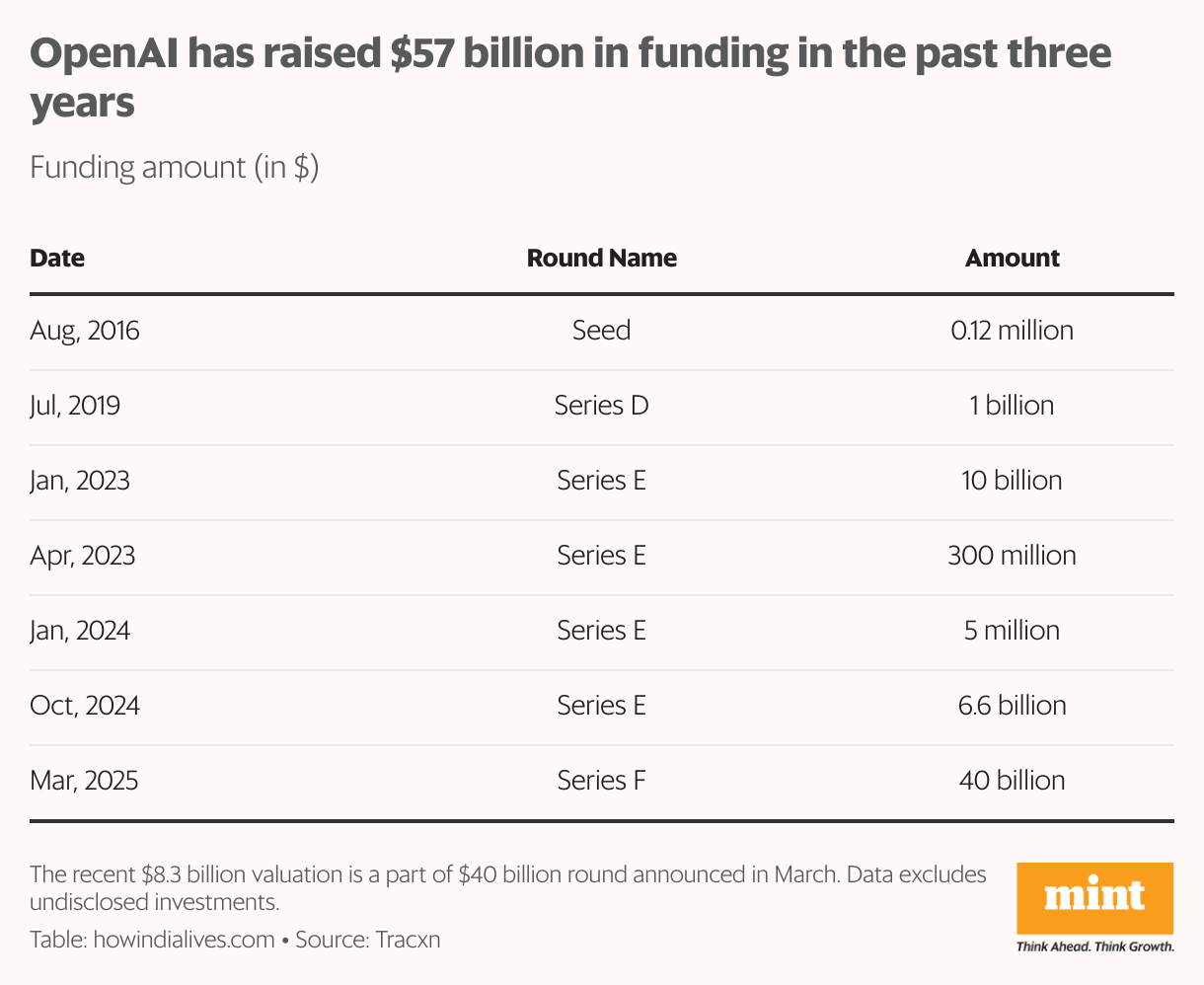
OpenAI’s newest funding spherical, price $8.3 billion, was oversubscribed 5 instances. The investor urge for food mirrored their confidence within the AI startup’s potential to dominate a market that the UN Commerce and Growth initiatives will explode by 25 instances in measurement in a decade.
OpenAI’s momentum is plain. The corporate has repeatedly upgraded its flagship ChatGPT product, lately launching GPT-5, which it claims can present PhD-level experience. Financially, its revenues have doubled in seven months, reaching $1 billion a month, with projections to hit $20 billion in annualised income by the tip of the 12 months.
The capital inflow will primarily assist OpenAI scale its compute infrastructure, notably Stargate, a three way partnership with Japanese funding agency SoftBank and know-how firm Oracle to construct the world’s largest AI supercomputing infrastructure. OpenAI can be establishing its first information centre in Europe subsequent 12 months, which can home 100,000 Nvidia processors.
This infrastructure funding is vital as corporations race to manage the information centres and AI chips important for coaching and working superior synthetic intelligence fashions.
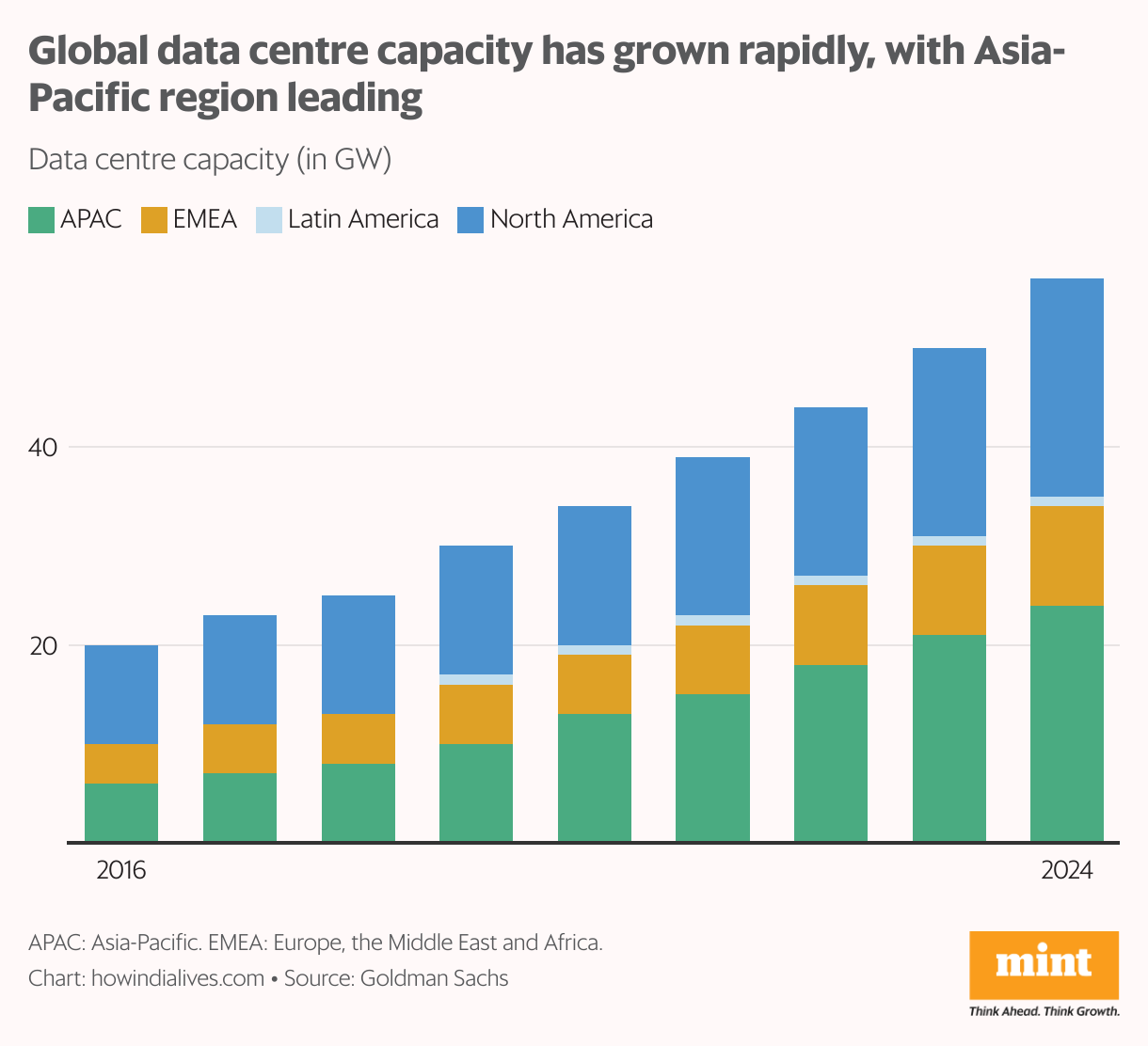
The numbers replicate this actuality. International information centre capability surged from 20GW in 2016 to 57GW in 2024, with Goldman Sachs projecting 122GW by 2030. Whereas OpenAI’s valuation displays investor confidence, the fundraising itself underscores the infrastructure investments wanted to keep up management within the AI market.
Challenger pack
OpenAI faces rising competitors from well-funded AI startups. Anthropic, based by former OpenAI workers, is nearing a $5 billion funding spherical that may worth it at $170 billion, up from $61.5 billion in March. Elon Musk’s xAI has raised $10 billion at an $80 billion valuation and is searching for further funding at a possible $200 billion valuation.
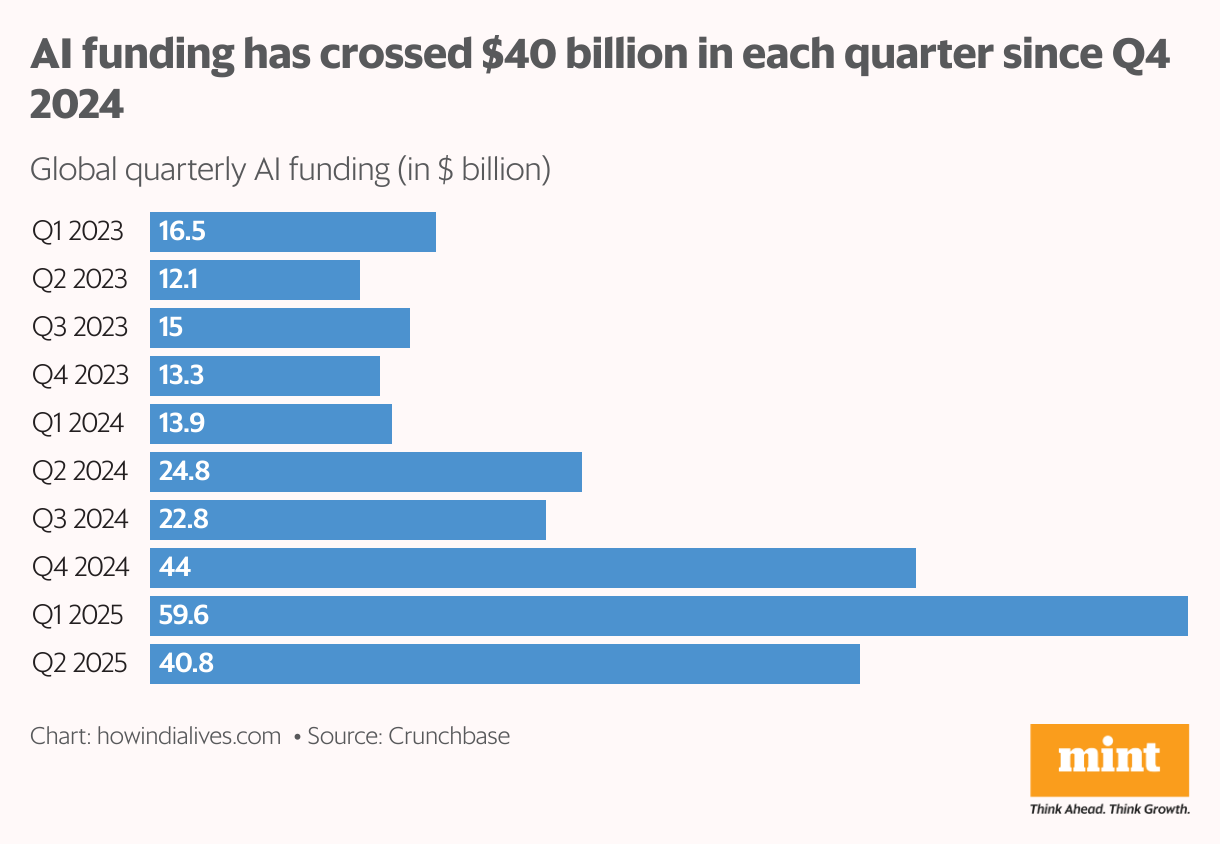
Enterprise capital funding to AI corporations has exceeded $40 billion in every of the previous three quarters, in response to Crunchbase.
This monetary backing is translating into aggressive mannequin efficiency. On the GPQA Diamond benchmark, which exams PhD-level science questions, xAI’s Grok 4 Heavy scored 88.9% and Anthropic’s Claude Opus 4.1 scored 80.9%.
The panorama shifted when Chinese language startup DeepSeek launched highly effective open-weight fashions obtainable free of charge. OpenAI launched its personal open-weight fashions in response. The competitors now spans each proprietary and open-source approaches.
Incumbent benefit
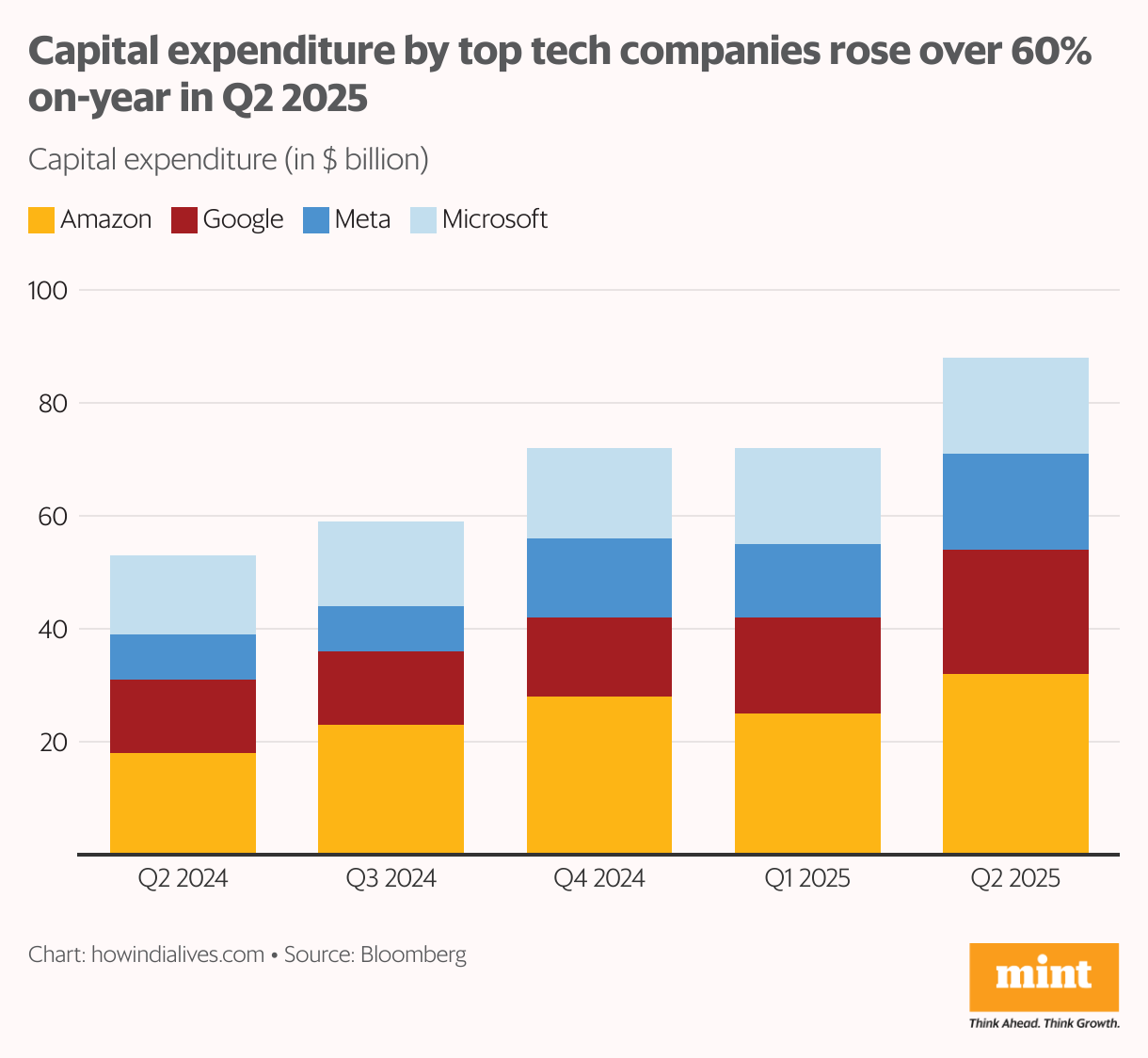
OpenAI additionally faces strain from the Large Tech corporations. Meta, Google, Amazon, and Microsoft have collectively spent $291 billion over the previous 12 months, largely for AI infrastructure.
Final month, in a $2.4 billion deal, Google employed key executives from Windsurf, an AI coding firm that OpenAI needed to accumulate. Google has additionally built-in ‘AI Overviews’ with its search engine, turning it into an “reply engine” that straight competes with the core perform of chatbots like ChatGPT. This technique leverages Google’s 2 billion month-to-month customers and its market dominance.
Meta, in the meantime, is restructuring its AI division into Meta Superintelligence Labs. It has additionally acquired top-tier AI researchers from OpenAI, with multi-million-dollar compensation packages.
Associate paradox
OpenAI’s relationship with Microsoft, nonetheless, has turned difficult.
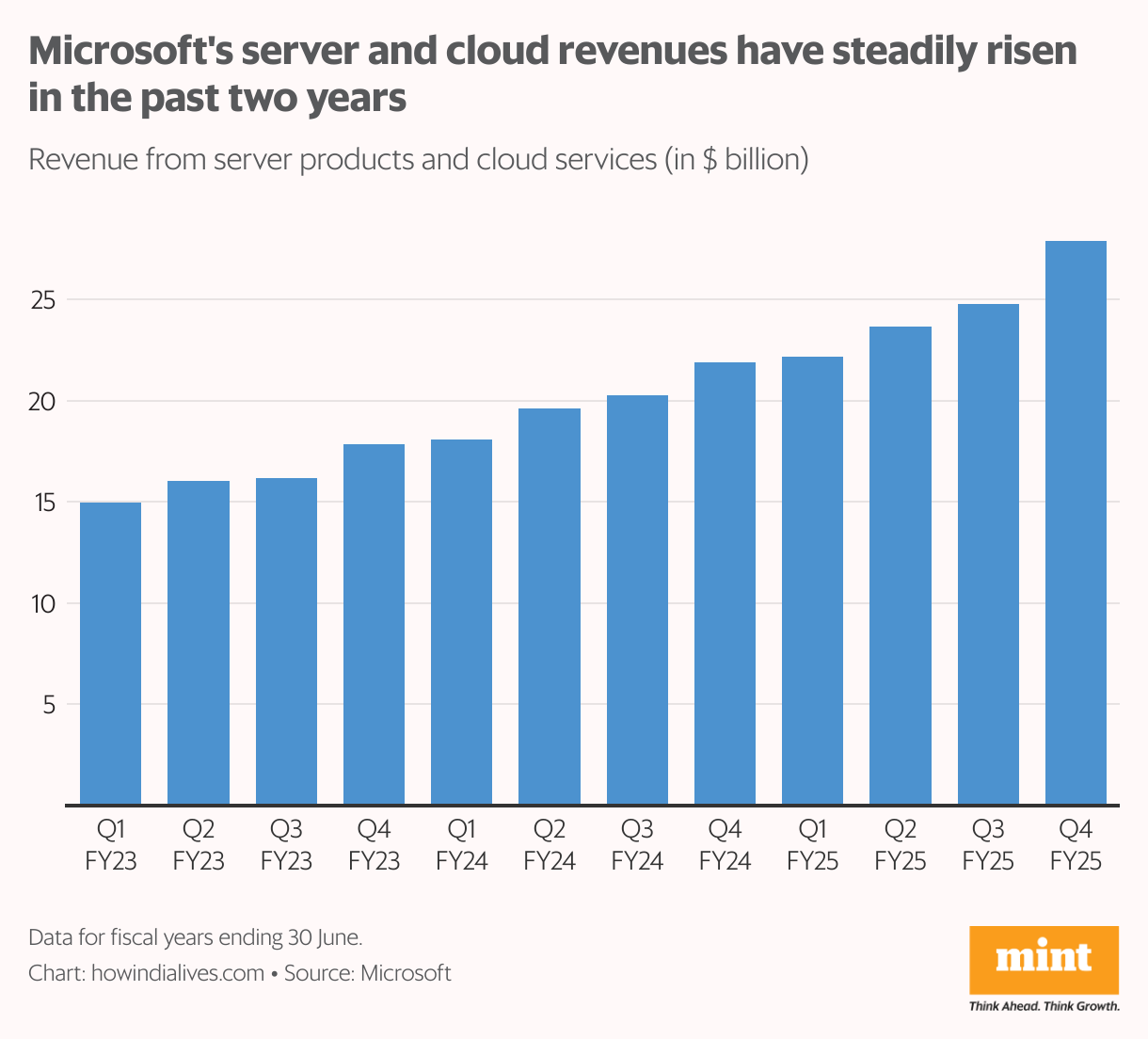
Microsoft, OpenAI’s main backer with a $13.75 billion funding, can be a direct competitor searching for to guide the AI revolution. Copilot, Microsoft’s AI platform, boasts over 100 million month-to-month customers. Microsoft’s server merchandise and cloud companies income jumped 27% year-over-year within the three months ended 30 June, pushed by development in Azure, its cloud or distant computing platform.
Microsoft holds essential leverage as OpenAI makes an attempt to transform right into a for-profit firm—a prerequisite for unlocking SoftBank funding and IPO plans. Nonetheless, Microsoft has been withholding approval as each corporations negotiate revising their contract, set to run out in 2030.
A significant sticking level is a clause that might terminate Microsoft’s entry to future OpenAI know-how if the startup’s board declares that synthetic normal intelligence—AI’s capability to study and perceive like people and apply that data to execute duties—has been achieved.
This friction has actual penalties: OpenAI’s try to accumulate AI coding startup Windsurf failed as a result of Microsoft’s IP rights would have prolonged to the brand new know-how, which Windsurf rejected.
OpenAI wants capital to beat these structural challenges and funding obstacles.
www.howindialives.com is a database and search engine for public information
========================
AI, IT SOLUTIONS TECHTOKAI.NET