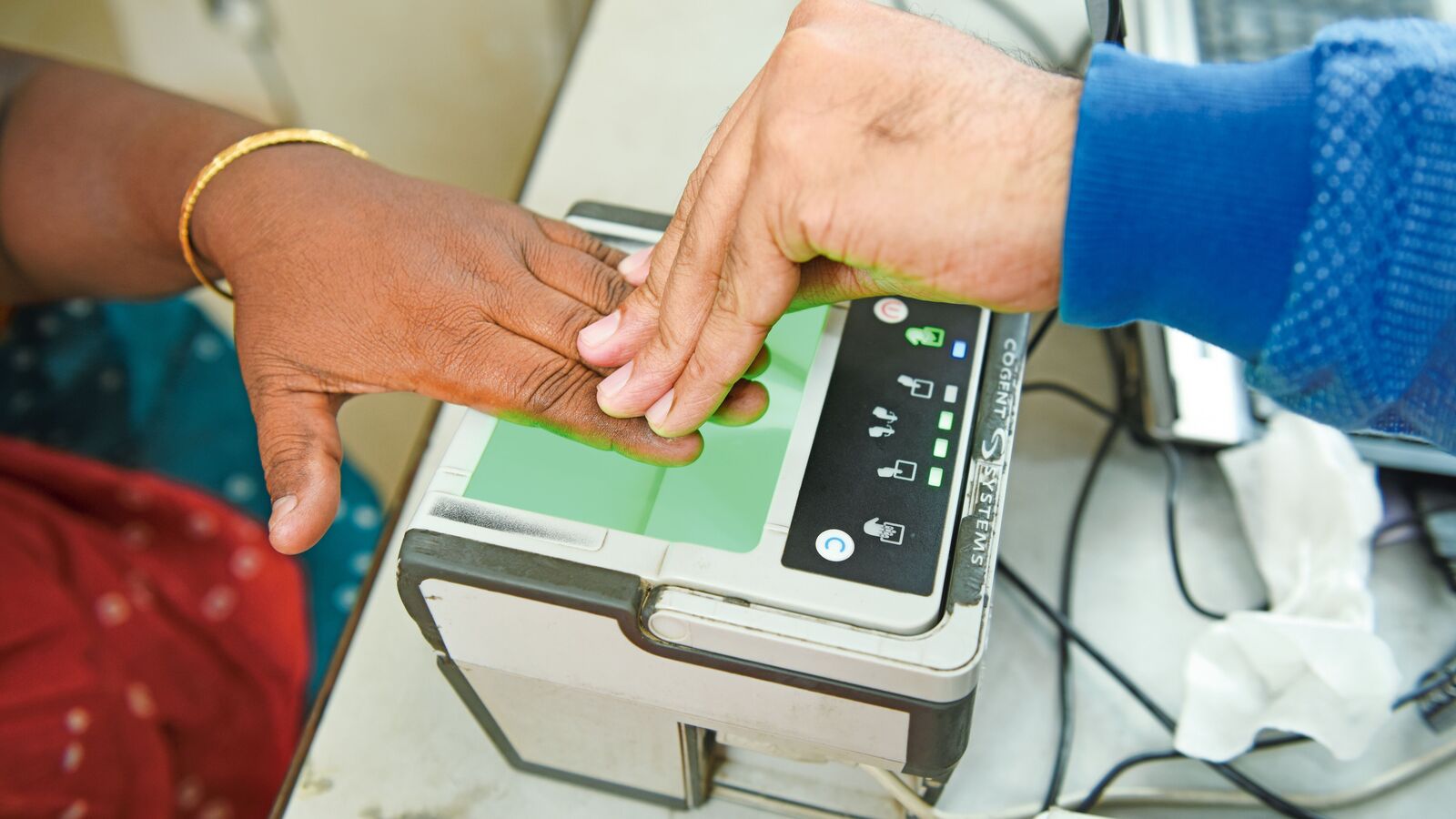
But, in line with the World Financial institution, greater than 10% of the world’s inhabitants—largely in Sub-Saharan Africa and South Asia—nonetheless lacks any official or digital ID. With out identification, entry to jobs, healthcare, monetary assist, cell providers, and even the appropriate to vote will be severely restricted.
On this context, digital ID programs like India’s Aadhaar, the open-source Modular Open Supply Identification Platform (MOSIP) from the Worldwide Institute of Data Know-how Bangalore (IIIT-Bangalore), and OpenAI chief government Sam Altman-backed World ID are gaining traction.
Nonetheless, not all approaches are being embraced equally. Altman’s World ID, which goals to confirm people via biometric scans to counter AI-driven bots, is elevating privateness alarms. On 20 June, when Semafor reported that Reddit is contemplating adopting World ID to adjust to potential age-verification guidelines and curb pretend accounts, the concept sparked a backlash, with some customers even threatening to go away the platform if the system is carried out.
What’s World ID?
It’s a comparatively new entrant within the digital id area. Aadhaar was launched in 2009, and 9 years later, it impressed the creation of MOSIP. In 2019, Sam Altman and Alex Blania based Instruments for Humanity, which launched a crypto mission known as World Coin and a World ID in July 2023 to confirm customers by scanning their eyes (iris) with a metallic machine known as the ‘Orb’.
World, an actual human community, says it at the moment has 12 million individuals who have signed up globally, and 26 million app downloads. As compared, the 12-digit Aadhaar has about 1.39 billion registered customers so far, whereas MOSIP has 133 million registered customers so far in 26 international locations throughout Asia Pacific, Africa, Latin America, and the Caribbean.
In early Might, Altman rebranded the biometric system as World and unveiled the Orb Mini, a conveyable iris scanner that generates a blockchain-based World ID. The Orb now additionally has a mobile-phone-size counterpart. The World ecosystem at the moment includes the World ID, World App, World Chain, and the Worldcoin (WLD) crypto token.
One might obtain the World App to find a close-by World Area. In response to the corporate, greater than 7,000 of World’s Orbs will likely be out there for iris scans at bodily “World Area” places within the US and in Razer (a way of life model for avid gamers) shops.
How does the know-how work?
World ID makes use of an Nvidia-powered machine known as the Orb to create a novel cryptographic code that confirms a consumer is an actual, distinctive particular person. Constructed on an open-source, decentralized protocol, World ID permits broad developer entry. The Orb encrypts and indicators consumer photographs for safety, sends them to the consumer’s cellphone through its server, after which deletes them.
WLD, however, is capped at 10 billion tokens. It launched with 143 million—100 million loaned to market makers and the remainder given to early verified customers. WLD is now built-in with platforms like Tinder and supported by Visa and Stripe.
World ID might sound much like CAPTCHAs that show to machines that you are a human via behavioural checks like picture choice. However not like CATPCHA, which is barely a one-time requirement when accessing a web site or on-line service, World ID goals to assign a persistent, world id tied to 1’s biometric signature.
The comparability to India’s Aadhaar—the world’s largest biometric ID programme—can also be comprehensible. However Aadhaar is state-run and central to accessing every part from rations to banking within the nation. It captures fingerprints, iris scans, and demographic knowledge below a authorized framework—albeit with its personal controversies over privateness and exclusion.
World ID, in distinction, is a personal initiative. Its creators say World ID makes use of the open-source Semaphore protocol to forestall id monitoring throughout apps and publishes its code below an MIT-style licence that bans use for surveillance or rights-infringing functions. They add that cryptographic protections like zero-knowledge proofs will guarantee consumer anonymity, however these safeguards stay largely untested at scale.
So, why are there issues?
Whereas World has been launched within the US and the UK, regulatory pushback has been robust in different international locations, with some banning Orb or Worldcoin, or each, outright. These embrace Brazil, Colombia, Germany, India, Kenya, Portugal, South Korea, Indonesia, and Spain, in addition to the particular administrative area of Hong Kong. The European Union (EU) has flagged potential violations of the Basic Knowledge Safety Regulation (GDPR), citing points with significant consent and knowledge irreversibility.
Issues about coercion are particularly acute in low-income areas, the place crypto incentives might push individuals to commerce biometric knowledge with out absolutely understanding the dangers. For example, offline ‘Orb’ verifications and biometric identity-based consumer onboarding in India had been stopped in late 2023. Moreover, the Reserve Financial institution of India (RBI) has been constant in expressing its displeasure with cryptocurrencies whilst positive factors from cryptocurrencies in India are handled as revenue, and a 1% tax is deducted on the supply.
WLD is at the moment priced at ₹77.55 on the Coinbase alternate, an enormous drop from its all-time excessive of ₹1,015.96 on 10 March 2024. With 1.66 billion WLD in circulation—17% of its 10 billion max provide—there have been 322 trades involving 218 patrons and 117 sellers as on 25 June.
There are different issues, too. In a 21 Might word, Andras Cser, VP and principal analyst at Forrester, identified that Orb faces a number of key challenges that might restrict its broader adoption. For one, not like most id programs that depend on built-in cell sensors like cameras or fingerprint readers, Orb requires a specialised iris scanner, including {hardware} prices and integration hurdles.
Second, with out mobile-compatible sensors, it struggles to assist widespread use circumstances like journey check-ins or on-line registration, and will face critical scalability points. Accuracy can also be a priority. Components like alcohol consumption or eye problems can scale back the reliability of iris scans, Cser famous.
Privateness worries persist, as iris knowledge, even when encrypted or deleted, raises questions on consent and knowledge utilization, Cser underscored.
Safety is one other subject. Previous hacks of iris scanners present they are often fooled by easy strategies like doctored photographs. Lastly, Orb’s system isn’t linked to government-issued IDs like Aadhaar, limiting its utility for providers that require formal verification, and its centralized design additional restricts broader interoperability.
For example, MOSIP’s absolutely open-source codebase is accessible on GitHub. It additionally collaborates with the Institute of Electrical and Electronics Engineers (IEEE), governments, and trade companions to develop open requirements and protocols, guaranteeing straightforward integration, interoperability, and price effectivity. Additional, its cell digital pockets, Inji, permits residents to entry their digital identities even in distant areas with restricted connectivity.
Altman’s World believes that the mission “…may significantly enhance financial alternative, scale a dependable resolution for distinguishing people from AI on-line whereas preserving privateness, allow world democratic processes, and present a possible path to AI-funded UBI (Common Primary Earnings)”.
Nonetheless, the above-cited issues underscore that the talk will not be a lot about whether or not digital id is important in an AI-first world however extra about who defines it, who income from it, and whether or not consent can actually exist.
========================
AI, IT SOLUTIONS TECHTOKAI.NET